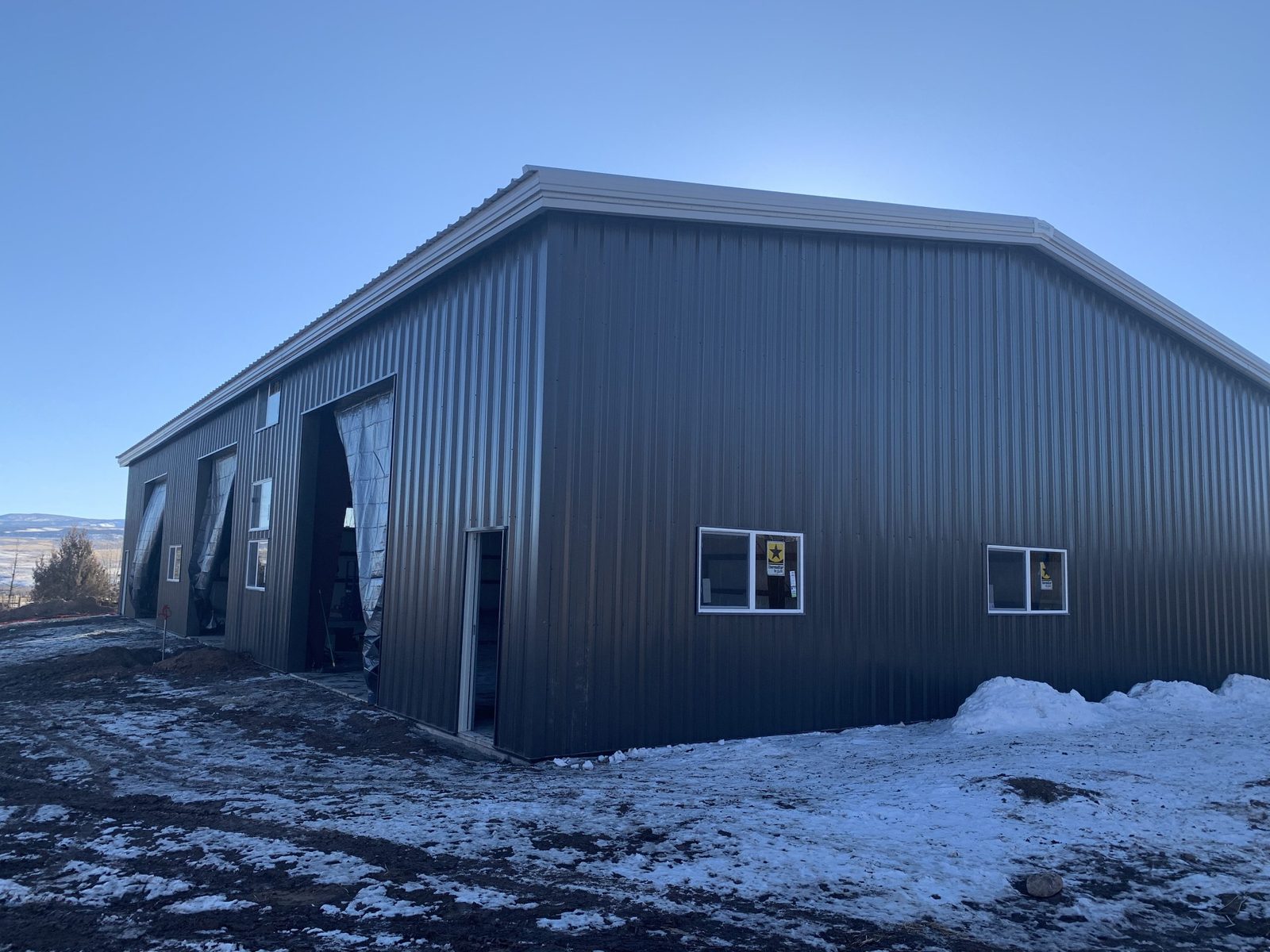
The signs that a steel building needs repair after winter or a storm are mostly visible from the ground and from inside. Look for a roof line or wall that is no longer straight, bent girts, purlins or bracing, trim and panels that have lifted or gone missing, dents and punctures, loose fasteners, rust where snow and water sat, doors that stick, and new leaks. Steel building repair starts with a careful look at all of those, without climbing onto the roof.
Some of what you find can wait for a routine repair. Anything bent in the main frames or bracing is different: it needs an engineer’s review before anyone moves, straightens or replaces a part. This guide sorts the signs by what caused them and covers how to keep a record that makes the repair conversation easier.
Look safely, from the ground and from inside
Stay off the roof. A roof after a storm or a snowfall is slippery, and panels or skylight panels may be damaged. Federal fall protection rules for construction work treat skylights as holes that workers must be protected from falling through, and University of Minnesota Extension warns of the danger of falling from a snow-covered or icy roof.
Heavy snow calls for extra care. University of Minnesota Extension advises checking for signs of damage before entering a building with deep snow on its roof, and says that if you see signs of damage or failure, don’t climb onto the roof or go inside while the snow is still there. It also warns that ice and snow sliding off a roof can fall on people, animals or equipment, so keep clear of the eaves.
Keep people, animals and vehicles away from any area that looks damaged until it has been checked, and take your photos from a safe distance.
After heavy snow: signs the frame is working too hard
Snow load shows up first in the lines of the building. University of Minnesota Extension’s checklist for farm buildings starts with three questions:
- Do the sidewalls bulge anywhere?
- Is the roof line still straight?
- From inside, do the ceiling, the exposed framing or the walls show signs of damage?
On a steel building, look up at the purlins that run across the roof and the girts that run along the walls. Sagging, twisting or bent members, braces that have gone slack or kinked, and rafters that no longer line up with their neighbors are all signs to take seriously. So is a door that suddenly binds in an opening that used to be square.
Snow doesn’t load a roof evenly. The same Extension page notes that drifting builds uneven loads, and that lower roofs and lean-tos collect snow and ice sliding off the roof above them. Check those lower roofs closely. How much snow a building is designed to carry is a separate question, covered in our post on what Colorado weather means for a steel building.
After high wind: trim, panels, doors and bracing
Storm damage on a metal building from wind usually starts at the edges, where wind pulls hardest. Walk the building and look for:
- ridge, eave, corner and base trim that has lifted, bent or gone missing
- wall or roof panels loose at their edges or corners, or fasteners that have backed out
- overhead or sliding doors that are bowed, off their tracks or no longer latch
- rod or cable bracing that has gone slack or bent
- dents from wind-blown debris
Loose trim and panels are worth dealing with promptly, because a panel that is flapping in the wind tends to tear its fastener holes and loosen its neighbors.
After hail: dents, punctures and skylight panels
NOAA’s National Severe Storms Laboratory says hail the size of a quarter, 1 inch across, or larger is considered severe. It also notes that strong winds can drive hail at an angle, or nearly sideways, hard enough to tear up siding and break windows, so check every wall as well as the roof.
After a hailstorm, start with the parts most likely to leak. Look for cracked or holed skylight panels, bent trim, and panels that are punctured or creased at a lap. Dents on their own are often cosmetic, but a dent that has cracked a panel’s coating can let rust start. For what hail does to a roof in particular, see why steel building roofs leak.
Rust and wear that winter uncovers
Rust on a metal building usually starts where water and snow sit longest: along the base of the walls and the base trim, at panel laps, at cut edges and around fasteners. Snow piled against a wall for weeks keeps that lower band wet.
Winter also shows up slower problems:
- fasteners that have loosened, rusted or lost their washers
- sealant that has cracked at laps, trim and around doors
- wet, sagging or torn insulation, from a leak or from condensation
- worn door seals and weatherstripping
Surface rust caught early is a maintenance job. Rust that has eaten through a panel, or through the base of a column or girt, is a repair, and on framing it is a structural question.
When steel building repair needs an engineer first
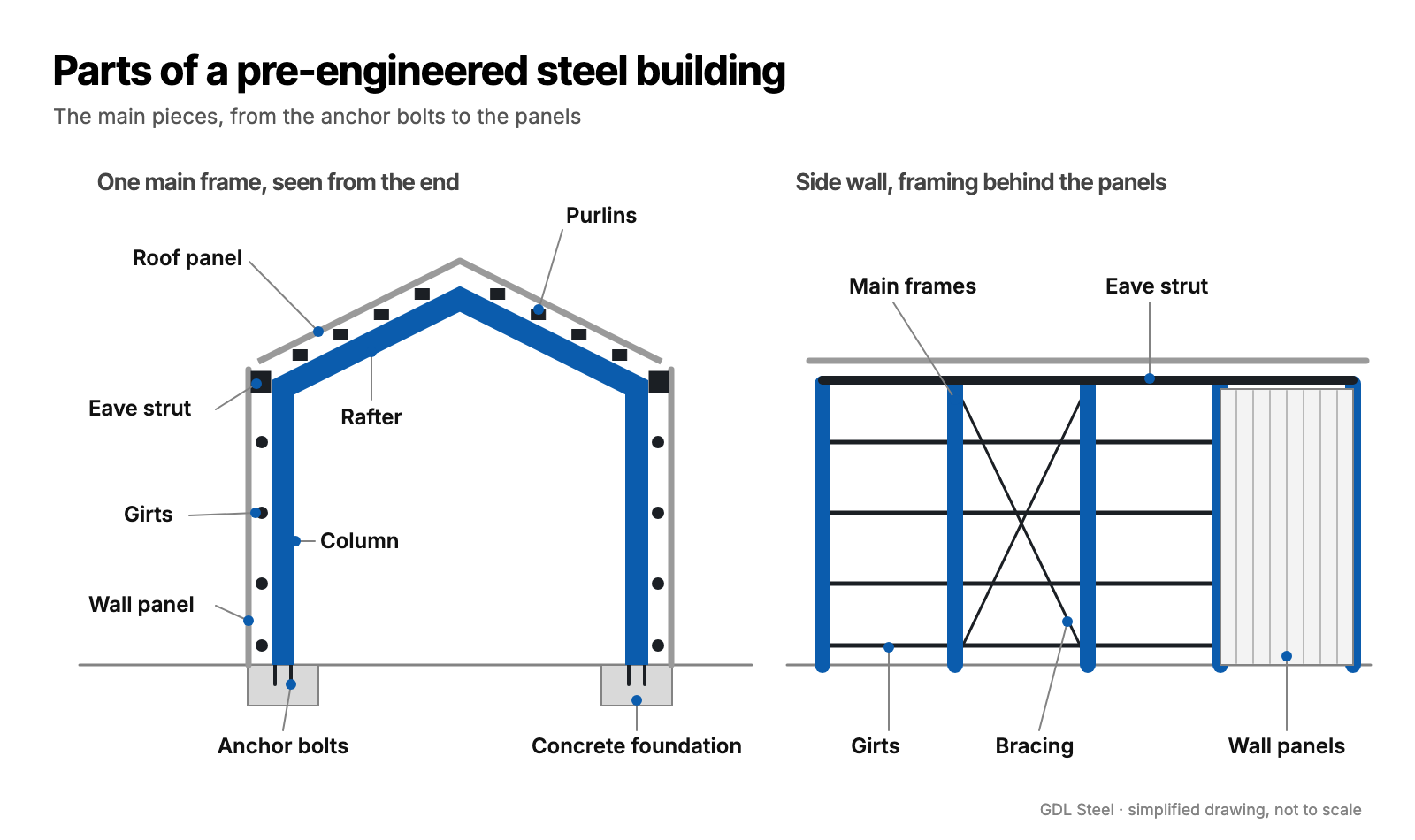
A pre-engineered steel building works as a system. The main frames, each made of columns and a rafter, and the bracing between them carry the snow and wind loads down to the foundation. The purlins and girts carry the roof and wall panels and pass their loads to the frames.
That’s why damage to the main frames or bracing needs an engineer’s review before anything is straightened, cut or replaced, ideally working from the building’s original drawings. The same goes for a damaged anchor bolt, base plate or column base. Bent girts and purlins are secondary framing, but they still need the right replacement pieces and connections. For more on repairs to existing buildings, see our pages on steel and metal building repairs and roof repairs.
Keep a simple record as you go: the date, what the weather did, wide photos from each corner of the building, close-ups of each problem, and notes on anything that changes over the following days.
Most of what a steel building needs after a hard winter or a storm shows up in a careful walk-around. Look from the ground and from inside, keep off the roof, write down what you find, and have anything bent in the main frames or bracing reviewed by an engineer before it is repaired.
Common questions
Is a dent in a steel wall panel something to worry about?
A shallow dent is often cosmetic. Look closer if the panel is creased, torn or punctured, or if the dent sits over a girt that also looks bent. Damage low on a wall from a vehicle or equipment can hide bent framing behind the panel.
Should snow be cleared off a steel building roof?
It depends on how much snow is there and what the building was designed for. University of Minnesota Extension says the amount of snow that is unsafe depends on the building’s design, recommends hiring a professional for removal where possible, and warns that hard scraping or chipping at ice can damage a roof. If the walls bulge or the roof line sags, don’t climb onto the roof or go inside while the snow is still on it.
Why won’t a door close properly after heavy snow?
The door itself may be the problem, such as a bent track or a damaged panel. But a door that suddenly binds in an opening that used to be square can also mean the framing around it has moved under load. If the wall or roof line near the door looks out of line, treat it as a framing question and have it checked before forcing the door.
What should I photograph after a storm?
Take wide shots of each side of the building from its corners, then close-ups of each area of damage, before anything is moved or repaired. Note the date and what the storm did. If you plan to make an insurance claim, ask your insurer what it needs before repairs start.
Damage to a steel building?
GDL Steel repairs existing steel buildings in Colorado Springs and along the Front Range. Call (719) 820-5298 or send us a message. More about Steel Building Repairs.
Keep reading
- Why Steel Building Roofs Leak, and How Leaks Get Fixed
- Hail, Snow and Wind: What Colorado Weather Means for a Steel Building
- From Frame to Finish: How a Pre-Engineered Steel Building Goes Up